
Simply Bhutan TripVerified
Phuentsholing 1N – Thimphu 3N – Paro 2N
Itinerary
Day 1: NJP Railway Station or Bagdogra Airport - Phuentsholing
Pick up from NJP/Bagdogra and we will proceed to Phuentsholing for your permission procedure. Check in at the hotel and take some rest.
Overnight stay in Phuentsholing.
Day 2: Phuentsholing – Thimphu
After breakfast, the journey west takes us back to Paro Valley, following the Wang Chhu and Pa Chhu rivers. A Paro cultural tour should always start with a casual visit to:
- National Museum: Housed in the Ta Dzong (watchtower) of Rinpung Dzong, the museum features an intriguing collection of artifacts that introduce visitors to Bhutan’s rich culture and heritage. The exhibits, gathered from across the country, span different eras, with some dating back to 2000 B.C. The galleries showcase Bhutan’s transition from the Stone Age to a modern Mahayana Buddhist kingdom.
- Paro Dzong: Admire the remarkable architecture of this 17th-century fortress, one of Bhutan’s finest architectural landmarks. Also known as Rinpung Dzong, meaning “Fortress on a Heap of Jewels,” it was built to defend Paro from Tibetan invasions. Today, it serves as the administrative and monastic center of Paro District. From the Dzong, enjoy a leisurely walk back to Paro town via the scenic Nyamai Zampa, a traditional Bhutanese cantilever bridge.
Day 3: Thimphu Sightseeing
Morning after breakfast, visit:
-
Memorial Chorten: The Memorial Stupa of Thimphu, also known as the Thimphu Chorten, is located on Doeboom Lam in the southern-central part of the city, near the main roundabout and the Indian Military Hospital.
-
Buddha Dordenma Statue: The Great Buddha Dordenma is a gigantic Shakyamuni Buddha statue nestled in the mountains of Bhutan, celebrating the 60th anniversary of the fourth king, Jigme Singye Wangchuck.
-
Takin Zoo: The Motithang Takin Preserve, located in the Motithang district of Thimphu, is a wildlife reserve dedicated to the Takin, the national animal of Bhutan. Originally a mini-zoo, it was converted into a preserve when it was discovered that the animals refused to inhabit the surrounding forest even after being set free.
-
General Post Office: Famous for producing unique and innovative stamps. After successfully selling peculiar "CD-stamps," Bhutan’s post office now offers personalized stamps—a great way to surprise your family and friends back home.
-
National Institute for Zorig Chusum: Commonly known as "the painting school," this institute operates
-
The Folk Heritage Museum: This museum is a beautifully restored, three-story traditional rammed mud and timber house. It was inaugurated by Her Majesty Queen Ashi Dorji Wangmo in 2001 and showcases historical and contemporary artifacts that offer a window into Bhutanese rural life.
-
Bhutanese Paper Factory: The art of making handmade paper in Bhutan dates back to the 8th century, though its early use was limited mainly to religious purposes. Today, it stands as an important element in preserving Bhutan's cultural heritage. The factory allows guests to view the traditional paper-making process and purchase unique gifts from their showroom.
Day 4: THIMPU TO PUNAKHA TO THIMPHU:
Dochula Pass
After breakfast, we will drive 45 minutes from Thimphu to Dochula Pass (3,050 meters). On a clear day, you will get a chance to see the magnificent Himalayan mountain ranges of Bhutan. Enjoy a spectacular, nearly 180-degree view of Bhutan's highest peaks.
The beauty of this scenic pass is further enhanced by the Druk Wangyal Chortens—a cluster of 108 memorial stupas built by the eldest Queen Mother, Her Majesty Ashi Dorji Wangmo Wangchuck. After a short tea break, we will continue our drive down into subtropical Punakha.
Chimi Lhakhang
Also known as the "Temple of Fertility," this site is located a pleasant 30-minute walk from the road, leading you through open farmlands and scenic rice paddies. Local lore believes that a demon who had been terrorizing the valley transformed herself into a black dog to escape the wrath of Drukpa Kuenley, famously known as the "Divine Madman," who subsequently subdued her here.
Punakha Dzong
This fortress is widely considered one of the most important and beautiful dzongs in the kingdom. Built by Zhabdrung Ngawang Namgyel in 1637, it served as the seat of the government every winter until Thimphu was established as the permanent capital in 1955.
It remains the winter residence of the Dratshang (the central monastic body). Take your time to admire the impressive, colorful, and detailed artistry of the complex, which includes massive statues of Buddha, Guru Rinpoche, and Zhabdrung Ngawang Namgyel, alongside intricate paintings of one thousand Buddhas.
Overnight Stay: Thimphu
Day 5: THIMPHU TO PARO:
After breakfast, the journey west takes us back to Paro valley, following through the Wang Chhu and Pa Chhu rivers. A Paro cultural tour should always start with a casual browse through the:
- National Museum: Housed in the Ta Dzong (watch tower) of the Rinpung Dzong. In the museum, the intriguing collection of artifacts serves as a great introduction to the rich culture and heritage of the kingdom. The national museum boasts a rich variety of exhibits collected from all over the country and belonging to different eras, some as early as 2000 B.C. A visit through the galleries shows the country’s transition from the later stone age to a modern Mahayana Buddhist Kingdom.
- Paro Dzong: Take in the amazing architecture of this 17th-century monument, a premier example of Bhutan’s architecture. Paro Dzong, built in the 17th century to defend Paro from the Tibetan invasion, is also known as Rinpung Dzong, which means the ‘fortress on a heap of jewels’. This fine example of Bhutanese architecture now serves as a central monastic and administrative seat of the Paro district. From the Dzong, a leisurely walk back into Paro town crosses the scenic Nyamai Zampa, a unique model of Bhutan’s traditional cantilever bridge.
Dungtshe Lhakhang: Jangtsa Dumtseg Lhakhang is a Buddhist temple in western Bhutan. The temple is notable as it is in the form of a Chorten, which is very rare in Bhutan.
In the evening, explore the beautiful town of Paro, which features typical Bhutanese architecture.
Overnight Stay: Paro
Day 6: PARO SIGHTSEEING
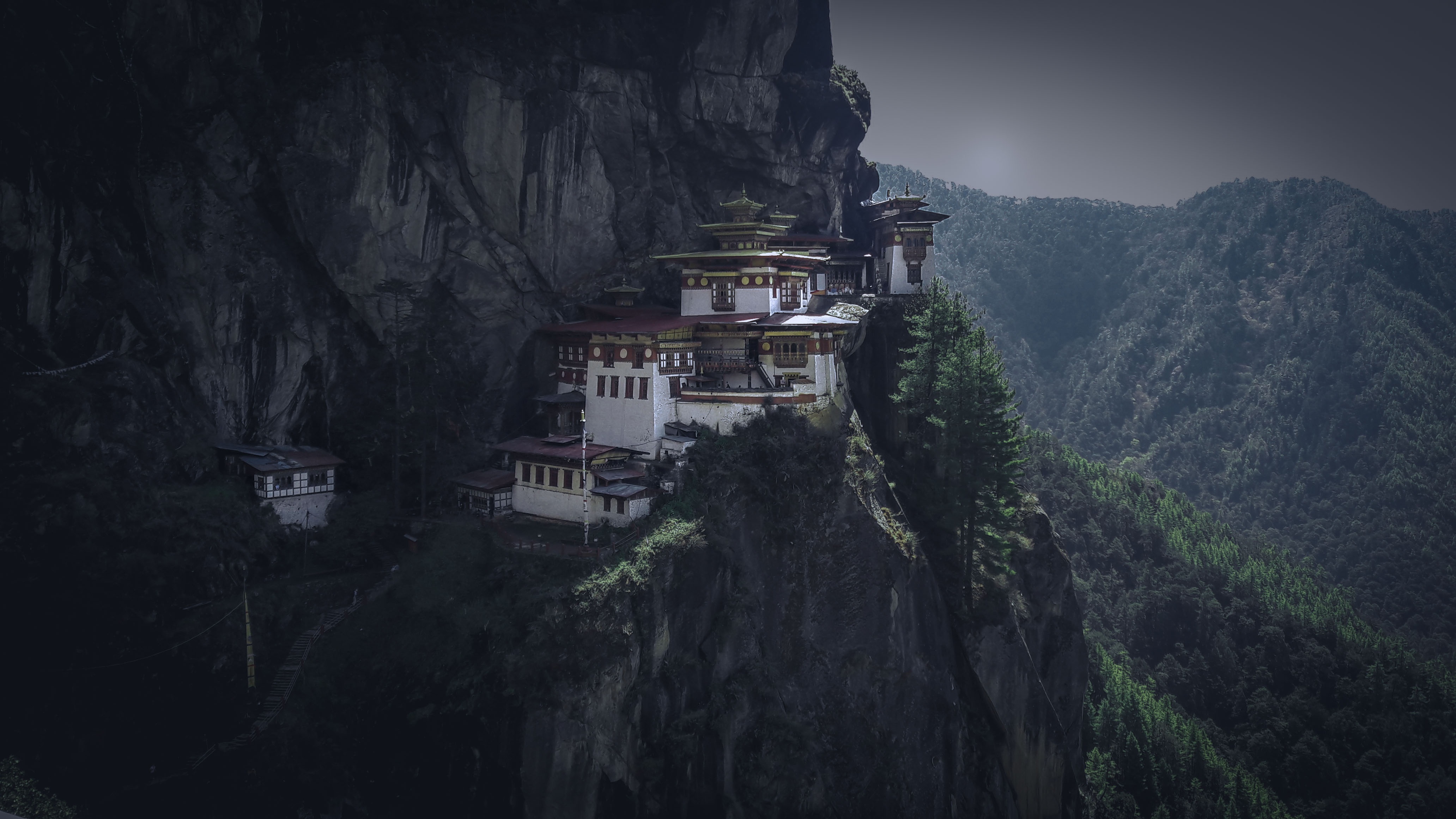
Taktsang (Tiger’s Nest Monastery)
4–5 Hours Hike
Tiger’s Nest, or Taktshang Goempa, is one of Bhutan’s most revered monuments. It literally hangs off the face of a sheer cliff, 900 meters (2,952 feet) above the valley floor.
Legend states that Guru Rinpoche flew into Bhutan on the back of a mythical tigress and meditated in a cave here before introducing Buddhism to the kingdom. The Taktshang Goempa is built around this very cave, which opens to the public once a year at the end of August. The hike offers spectacular, unforgettable views of the monastery and the valley below. Horses or mules can be arranged upon request to help lighten the journey for the uphill climb.
Kyichu Lhakhang
This 7th-century monastery is one of the oldest and most sacred temples in the kingdom, marking the very place where the seeds of Buddhism were first sown in Bhutan.
The Tibetan King, Songtsen Gampo, ordered the establishment of 108 monasteries across the Himalayan region to subdue evil spirits and spread Buddhist teachings. Of those 108 temples, two major ones were built in Bhutan: Kyichu Lhakhang in Paro and Jampa Lhakhang in Bumthang. Kyichu Lhakhang, mythologically said to pin down the left foot of a treacherous giant ogress, serves as a wonderful finish to a day of cultural immersion.
Drukgyel Dzong
This historic fortress is where Bhutanese warriors famously fought off and defeated Tibetan invaders centuries ago. In early 1954, Drukgyel Dzong was catastrophicly destroyed by a fire, leaving behind dramatic stone ruins. On a clear day, the magnificent snowy dome of sacred Mount Chomolhari (the "Mountain of Goddesses") can be seen in all its glory from the approach road to the fortress.
Day 7: Check Out and Departure
Today after breakfast, proceed to NJP/Bagdogra for your onward journey.
Your tour ends with happy and wonderful moments with Travel Ojo!
What's Included
06 NIGHT ACCOMODATION IN HOTELS
MEAL PLAN AS PER CHOOSEN PLAN
ALL SIGHTSEEING AS PER ITINERARY
ALL INTERNAL TRANSPORT AS PER ITINERARY
PICK UP AND DROP FROM HASIMARA.
ALL TAXES
Tour Price
₹24999/-
Duration
06 Night/07 Days
 WhatsApp Us